In machining and manufacturing workshops, cutting tools are high-value core assets. A precision milling cutter or drill bit can cost hundreds or even thousands of dollars. However, many workshops often overlook a critical issue: abnormal tool wear.
Tool damage not only entails direct procurement costs but also leads to hidden losses such as production downtime, reduced workpiece quality, and increased tool changeover time. In fact, proper storage and handling methods can significantly reduce tool wear, ensuring longer service life and more stable machining performance. When precision tools collide with one another during handling, that sharp metallic clang often signals that the expensive cutting edge has already suffered microscopic chipping.
Purpose of This Article
This article will delve into how proper tool cart design can prevent tool damage, improve workshop tool management, and optimize overall operational efficiency. Starting from the root causes of tool damage, we will analyze the core design elements of protective tool carts in detail to help you make informed purchasing decisions. In reality, tool damage is often not caused by incorrect cutting parameters or poor tool quality, but rather by issues in storage and handling. Today, let’s discuss how choosing the right tool cart can help you truly maximize the lifespan of your cutting tools.
I. Why Do Cutting Tools Fail in the Workshop? Three Unavoidable Scenarios
1. Haphazard Storage and Piling: Tools Colliding with Each Other
Many workshops still use ordinary metal cabinets or open shelves to store cutting tools. Milling cutters, drill bits, and tool holders are mixed together, requiring a lot of rummaging to retrieve the right one. Cutting tools are not like screwdrivers. Especially carbide inserts, which are highly brittle—even a slight bump can cause microscopic chipping. Such damage may not be visible to the naked eye, but it will quickly worsen during machining, leading to surface roughness that exceeds specifications.
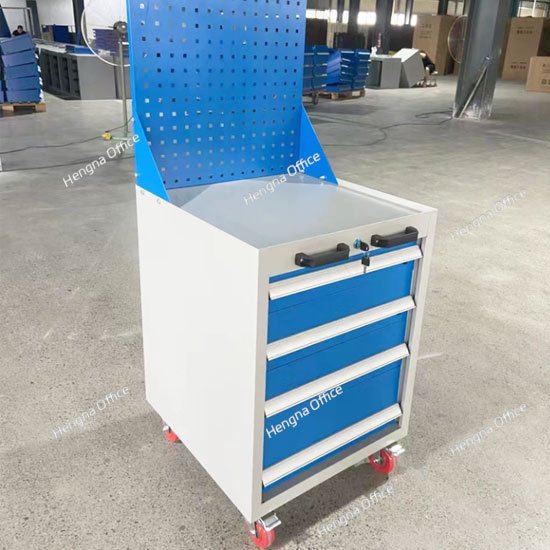
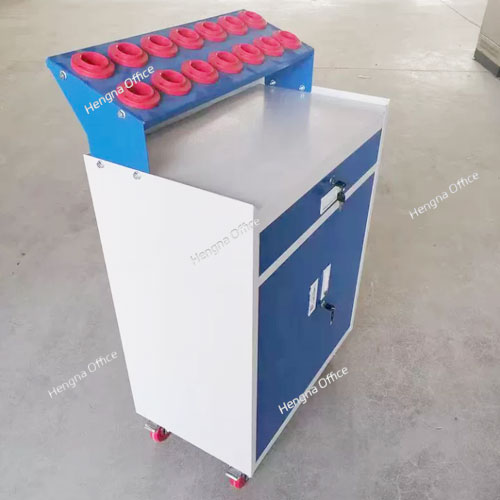
2. “Jolting damage” during transport
Moving tools around the workshop is a high-risk period for damage. When workers use standard flatbed carts to haul a pile of cutting tools, even crossing a floor expansion joint or hitting a screw cap can cause the tools to bounce on the cart and collide with one another. A friend who works in mold making told me that he once transported a set of forming tools using a standard cart. Only after reaching the machine tool did he discover a small chip on the cutting edge. As a result, all the machined parts had indentations, and the entire batch had to be scrapped. This was a direct consequence of inadequate transport protection.
3. “Hidden Hazards” in the Work Environment
The workshop is filled with cutting fluids, oil mist, aluminum shavings, and iron dust. If cutting tools are left exposed, oil residue can corrode the tool shank and compromise its precision, while iron dust clinging to the cutting edge makes subsequent machining equivalent to sanding the workpiece with sandpaper. This is especially true near grinding stations, where abrasive particles floating in the air settle on the tools and cause wear.
1. Tool sleeves should be made of oil-resistant and non-slip material, and ideally be removable
The tool sleeves are in direct contact with the tools, so the material is critical. High-quality tool carts now use ABS engineering plastic for the sleeves. This material offers the right balance of hardness and flexibility to absorb impact without scratching the tool shanks like metal would. Additionally, it is oil-resistant, so coolant droplets won’t cause the tool to slip, ensuring the tool sits securely in place.
Another important point is that the tool holder plate should ideally be removable for adjustment. Since tools vary in length, a fixed tool holder plate may not always fit properly, causing the tool to wobble. A removable plate allows you to adjust the position yourself, offering much greater flexibility.

2. The tool holder must accommodate a full range of sizes, including BT and HSK
Workshop tooling rarely consists of a single specification. Machining centers commonly use BT40 and BT50, while high-speed machining uses HSK, and there are also some American-standard CAT tool holders. A qualified tool cart should be able to accommodate these specifications by swapping out the tool holders. The tool holders must fit the tool shanks tightly with no wiggle room, ensuring that the tools do not rattle or collide inside, whether they are stored for a day or moved around frequently.
3. Casters must be soft and equipped with brakes to prevent tool vibration during movement
Many people overlook casters, but they are actually crucial. Ordinary hard plastic wheels cause the entire cart to shake when crossing bumps, causing the tools inside their holders to vibrate as well. Repeated vibrations can lead to tool fatigue. A good tool cart uses industrial polyurethane wheels, which are soft and elastic, absorbing vibrations, rolling quietly, and protecting the workshop floor.
Even more critical is the braking system. At least two wheels must have brakes to prevent the cart from rolling away when stopped. This is especially important when handling heavy tools—if the cart starts moving unexpectedly, the tools could slip from your hands and fall. That’s not just a matter of damage; it’s a safety hazard.
4. The layout should be practical, allowing for easy access to tools without unnecessary hassle.
The design of a tool cart must take into account how users will interact with it. Frequently used tools should be placed at a height between the waist and chest level, so users don’t have to bend over or stand on tiptoes. Drawer compartments and tool holders should ideally be labeled so that the desired tool can be found at a glance. Don’t underestimate this—every minute a worker saves searching for a tool means one less time the tool is handled, naturally reducing the risk of damage.
Additionally, the cart must be sturdy and capable of bearing sufficient weight. Some cheap tool carts warp when fully loaded, making the drawers impossible to open—which is quite an awkward situation.
III. Using the Right Tool Cart Boosts Both Efficiency and Safety
In reality, a tool cart isn’t just a tool for protecting cutting tools; it’s also a key tool for workshop management. When every tool has a designated spot and workers follow established procedures for retrieval and storage, tools won’t be left lying around. The workshop looks tidy, and safety hazards are minimized. Furthermore, with reduced tool-searching time and smoother tool-changing motions, the entire machining cycle can be optimized.
Here’s a statistic to consider: An auto parts manufacturer found that workers previously spent an average of 5 minutes searching for and organizing tools during each tool change. With 8 changes per day, that adds up to 40 minutes daily—over 160 hours annually. After adopting tool carts with categorized labels, tool-finding time dropped to under 1 minute, saving tens of thousands in labor costs alone each year.
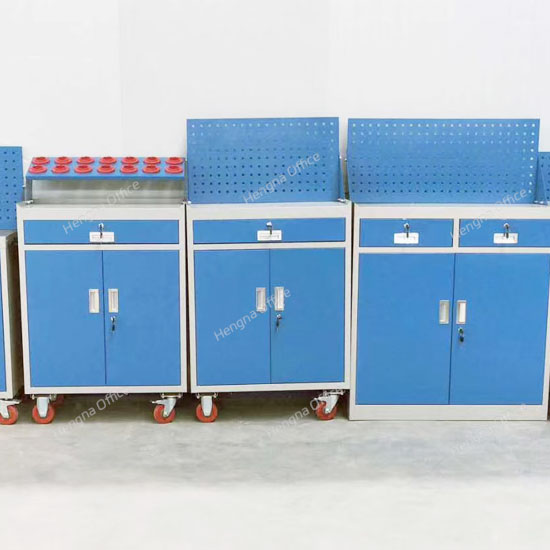
IV. How to Choose the Right Tool Cart for Your Workshop?
CNC Tool Cart Selection: Key Considerations:
| Category | Key Metrics | Recommended Standards | Why It Matters |
| Capacity & Size | Load & Dimensions | Match the heaviest tool weight; verify the longest shank length | Prevents frame deformation and ensures long tool shanks don’t collide. |
| Frame Material | Structural Integrity | Welded steel frame | Provides industrial-grade stability; bolted frames often wobble over time. |
| Tool Holders | Material Quality | ABS plastic | ABS is durable yet soft enough to prevent scratching high-precision tool shanks. |
| Work Surface | Resilience | Oil-resistant & non-slip coating | Protects the cart from corrosive cutting oils and prevents tools from sliding. |
| Casters | Mobility & Safety | Polyurethane (PU) material with brakes | PU wheels are oil-resistant and silent; brakes are essential for workplace safety. |
| Layout | Flexibility | Adjustable drawers/panels + Label holders | Allows for workflow optimization and quick tool identification. |
| Investment | Total Value (ROI) | Prioritize quality over the lowest price | High-quality carts protect expensive tools (worth $1,000s) from damage. |
V. Two Real-Life Case Studies
Case 1: Aviation Parts Factory
Previously, standard tool cabinets were used to store BT40 tool holders, resulting in severe tool damage and an annual scrap rate of 15%. After switching to tool carts equipped with ABS tool sleeves and shock-absorbing casters, collisions during transport were virtually eliminated. Tool lifespan increased by 30%, saving over 80,000 yuan in annual tool procurement costs.
Case 2: Large Automotive Repair Shop
Tools were scattered haphazardly, making sockets difficult to locate; new purchases were frequently lost. After introducing categorized tool carts, each tool has a designated spot, retrieval time was cut in half, the loss rate dropped by 80%, and repair efficiency improved significantly.
Abnormal tool wear and tear is a hidden cost in the workshop that is easily overlooked. Often, it’s not that workers don’t take care of the tools, but rather that the storage and handling systems are inadequate. A high-quality tool cart should feature oil-resistant and non-slip tool sleeves, compatibility with multiple sizes, shock-absorbing casters with brakes, and a well-organized layout. It helps maximize the lifespan of your tools, reduces machining quality issues, and boosts workshop efficiency.
Why not take a look at your workshop right now? How are your tools stored? Is it safe to transport them? If you’re unsure, it might be time for an upgrade.
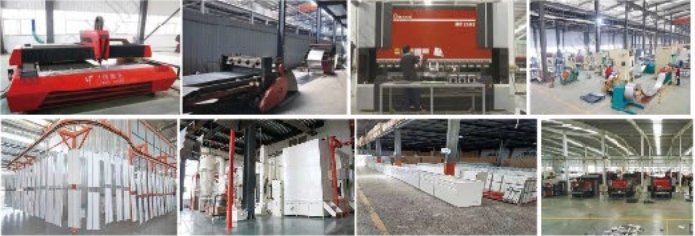
Frequently Asked Questions
Q: Our workshop mainly uses CNC milling machines. What material is best for a tool cart?
A: We recommend a combination of a steel frame and ABS tool holders. The steel frame is stable and has good load-bearing capacity, while the ABS holders protect the tool shanks. If there is a lot of coolant in the workshop, consider using HDPE corrosion-resistant material for the work surface.
Q: Can tool carts be customized?
A: Many brands offer modular designs, allowing you to choose different tool holders and the number of drawers to create your own configuration. Be sure to ask if adjustments are possible before purchasing.
Q: We have a small workshop with limited space. What do you recommend?
A: Choose a compact yet fully functional model, such as one with two or three drawers and a removable top shelf for tool holders. Just make sure it meets your needs—there’s no need to go overboard.