Tool cabinets are essential storage solutions in workshops, garages, and industrial settings. One of the key design variations in tool cabinets is the presence or absence of a backboard. This article examines the differences between tool cabinets with backboards and those without, providing insights to help users make informed decisions based on their specific storage needs. The analysis is based on the product offerings and expertise of Luoyang Hengna Office Furniture Co., Ltd., a manufacturer specializing in industrial storage solutions.
Structural Differences
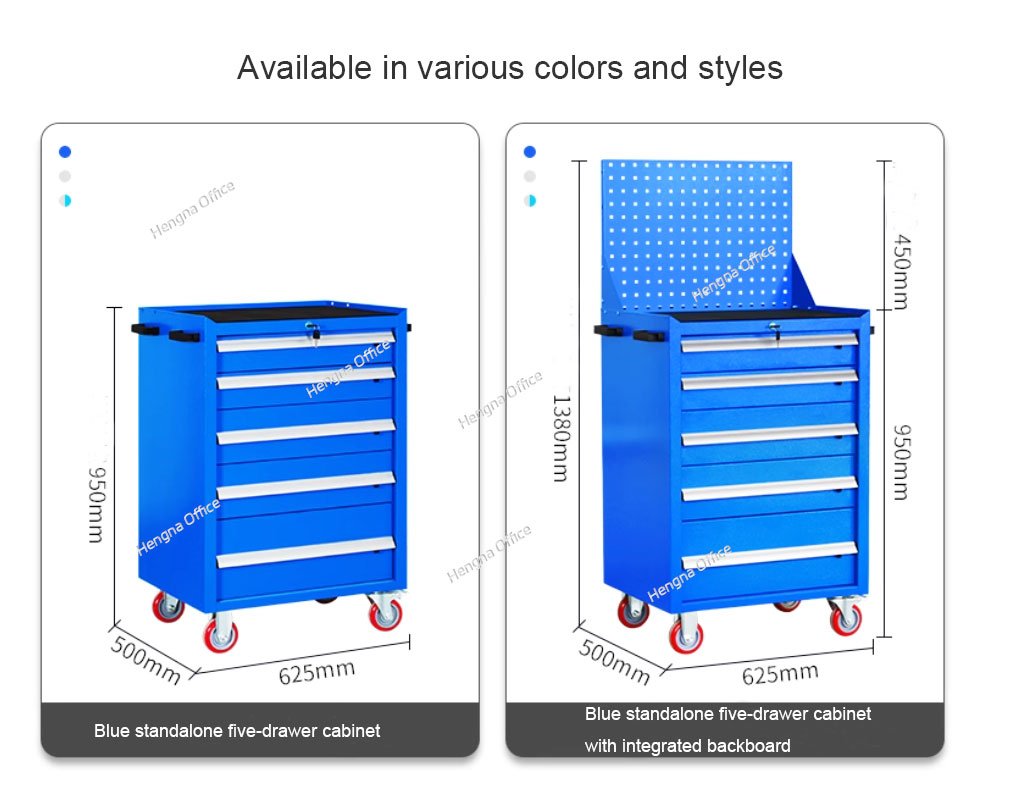
The primary structural difference between the two cabinet types lies in the back panel construction. Tool cabinets with backboards feature a solid panel that encloses the rear of the cabinet, typically made of the same material as the cabinet body. This backboard is usually welded or bolted to the frame, providing additional rigidity. In contrast, cabinets without backboards have an open rear, which may consist of a frame only or minimal cross-bracing.
Stability and Durability
Cabinets with backboards generally offer enhanced stability due to the additional support provided by the rear panel. This design is particularly beneficial in environments where the cabinet may be subjected to lateral forces or when heavy items are stored in the upper sections. The backboard helps distribute weight evenly and reduces the risk of cabinet racking or twisting. Cabinets without backboards, while still stable when properly constructed, may require additional reinforcement or placement against a wall to achieve similar stability levels.
Tool Cabinets Storage Functionality
The presence of a backboard affects the storage functionality in several ways:
- With Backboard: The solid rear prevents tools and items from falling out the back of the cabinet. It also provides a surface for mounting accessories such as pegboard hooks, small shelves, or tool holders. This configuration is ideal for storing loose items or when the cabinet is placed in an open area where access from the rear is not required.
- Without Backboard: The open rear design allows for easier access to tools from both sides, which can be advantageous in tight spaces or when the cabinet is placed against a workbench. However, it requires careful organization to prevent items from sliding out the back. This design is often preferred when the cabinet will be positioned against a wall, as the wall itself serves as a backboard.
Weight Considerations
Tool cabinets with backboards tend to be heavier due to the additional material in the rear panel. This can impact mobility, especially when the cabinet is fully loaded. However, the added weight also contributes to stability when the cabinet is stationary. Cabinets without backboards are lighter, making them easier to move, but may require more careful handling to avoid tipping when heavily loaded.
Environmental Suitability
The choice between backboard and non-backboard cabinets often depends on the specific work environment:
- Industrial Settings: In busy industrial environments with potential for impacts or heavy use, cabinets with backboards are generally preferred for their durability and security.
- Home Garages: For home garages where space may be limited and cabinets are often placed against walls, non-backboard cabinets can provide adequate functionality at a lower weight.
- Educational Workshops: In settings where tools need to be accessible from multiple angles, non-backboard cabinets offer flexibility. However, for secure storage of valuable tools, backboard cabinets with locking mechanisms are recommended.
Maintenance and Longevity
Both cabinet types require regular maintenance to ensure longevity. Cabinets with backboards may accumulate dust and debris behind the cabinet, requiring periodic cleaning of the rear surface. Non-backboard cabinets are easier to clean from all angles but may require more frequent checks of the rear frame for signs of wear or damage. The powder-coated finishes on both types should be maintained similarly, with regular cleaning and inspection for scratches or chips.
Cost Considerations
The manufacturing process for cabinets with backboards typically involves additional material and labor, resulting in a higher cost compared to non-backboard cabinets. However, the increased durability and functionality may justify the additional investment in demanding environments. Non-backboard cabinets offer a more economical solution for less intensive applications.
Conclusion
The choice between tool cabinets with and without backboards depends on specific storage requirements, environmental conditions, and budget constraints. Cabinets with backboards offer enhanced stability, security, and functionality, making them suitable for industrial and high-traffic environments. Non-backboard cabinets provide flexibility, lighter weight, and cost savings, ideal for home garages and applications where the cabinet will be placed against a wall. Luoyang Hengna Office Furniture Co., Ltd. offers both configurations to meet diverse storage needs in various professional settings.