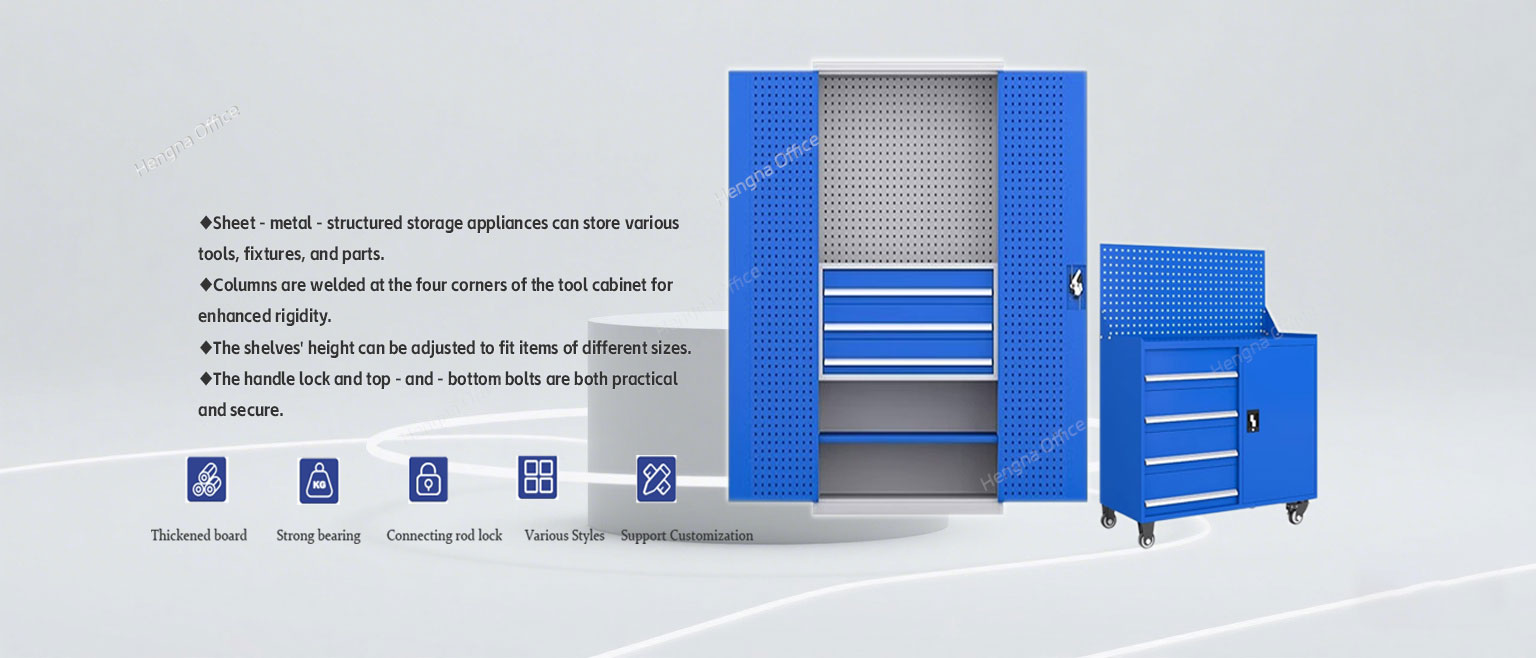
A 40-slot CNC tool cabinet is not storage. It is the thing that decides whether your BT40 holders still cut straight after two years in the crib. The number that matters is not how many holders fit. It is whether each holder has its own bay, with nothing touching the taper.
What 7:24 actually does, and why it sets the design
Every BT holder — BT30, BT40, BT50 — runs a 7:24 taper. The taper face is the locating surface. When the holder goes into the spindle, that face seats against the spindle taper and pulls the tool onto centre.
That is the whole reason a chipped taper matters more than a chipped flute. A nick on the taper face changes where the holder sits. The tool then runs off centre, and the error shows up as chatter, poor surface finish, or a bore that is a few hundredths out.
In storage, nothing protects the taper except the bay it sits in. A drawer full of loose holders is a drawer full of taper faces touching each other.
Four ways a holder gets damaged between jobs
Contact. Two holders in the same drawer, or one rolling against a steel divider. Carbide does not bend, it chips. The edge that touches is usually the finishing cutter, which has the least tolerance for it.
Corrosion. A holder that sits for a month in a humid shop picks up a spot of surface rust. It does not ruin the tool, but it changes the geometry enough to leave a mark on the work.
Wrong taper, wrong slot. BT40 and BT50 look similar at a glance. In a shop running both, a shared drawer is how a BT50 ends up jammed into a BT40 machine at the worst possible moment.
The drop. A drawer that slides open when the cabinet is moved dumps a row of holders onto the floor. That is the most expensive way to find out a drawer has no detent. We went through all five damage routes in our breakdown of how cutters get ruined in storage.
What one bay per holder changes on the floor
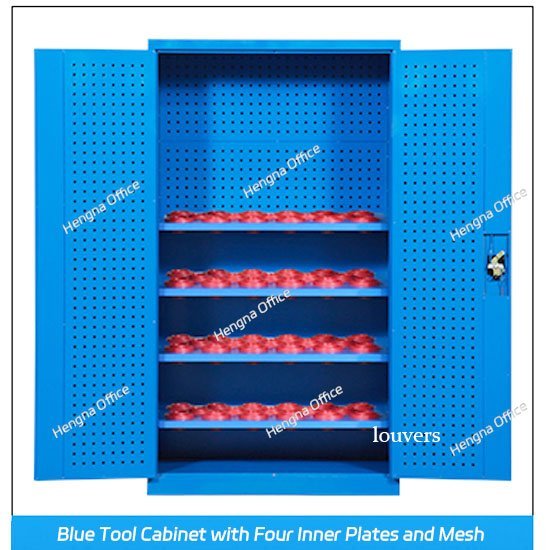
A CNC tool cabinet built this way follows one rule: one holder, one position, nothing else in that position. Each bay is sized for a single BT40 or BT50 holder, so the taper sits clear of the bay wall and clear of the holder next to it.
Two things follow from that. A missing tool is visible, because the empty bay shows. And a mis-filed tool is visible, because the number on the bay does not match the number on the holder.
That second point is what most shops underestimate. In a crib without numbering, a holder that gets put back in the wrong bay is effectively lost until someone happens to need it.
Where the cabinet should sit
The cabinet wants to be within a few steps of the machines, not at the far end of the shop. A crib that takes two minutes to walk to is a crib that gets bypassed: someone leaves a holder on the machine table instead of putting it away, and the next shift inherits a holder with no home.
Put it against a wall with the doors opening onto clear floor, and leave room at one end to set a holder down while you open the door. A cabinet boxed in on three sides becomes a shelf within a month.
HN-CT40 specifications
| Item | Detail |
|---|---|
| Model | HN-CT40 |
| Capacity | 40 BT40 or BT50 holder positions |
| Bay design | One holder per bay, taper clear of contact |
| Body | Reinforced cold-rolled steel, powder coated |
| Colour | Blue standard, other colours to order |
| Locking | Central lock, keyed alike on request |
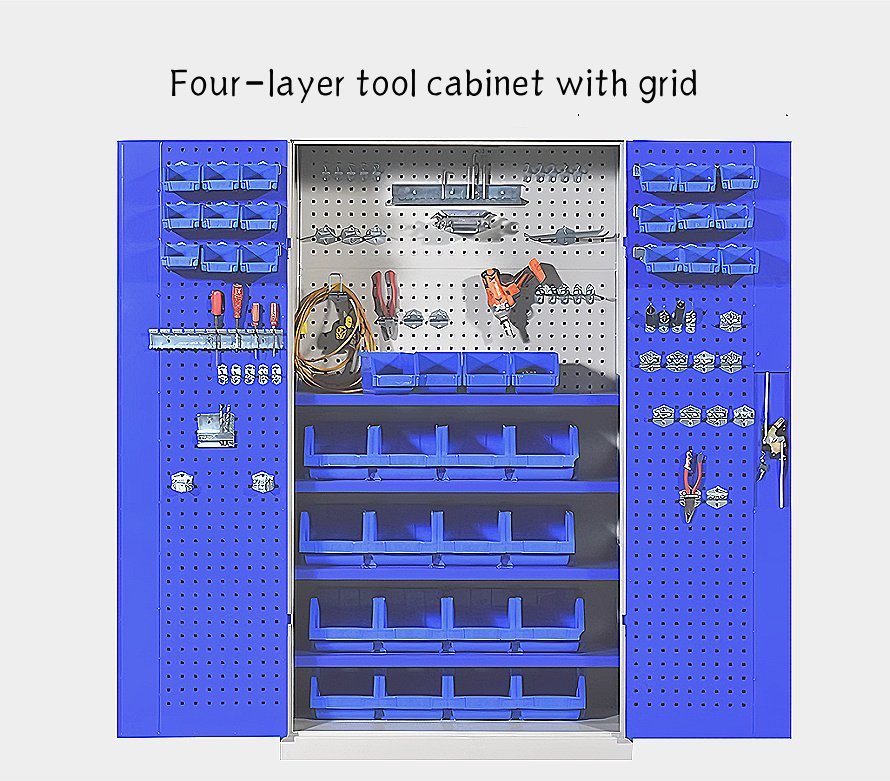
| Lower section | Grid shelves with ABS bins for cutters and spares |
| Assembly | Knocked down, labelled parts, tools included |
Need fewer slots in a smaller body? The numbered BT40/BT50 version for machine shops runs the same bay logic at a tighter footprint.
Working out how many slots you need
Count the holders that are out of the machine at any one time, then add a third. That is the working number.
- Holders in the crib, not on the spindle
- Plus the set waiting for the next job
- Plus the ones at the presetter or in for regrinding
A shop running three machining centres and two shifts typically sits between 35 and 55 holders in circulation. That lands on a 40-slot cabinet with the overflow on a second unit, or a 60-slot if the taper mix is wide. If your holders live on trolleys rather than in a crib, the blue vertical grid cabinet does the same job in a narrower body.
Do not size the CNC tool cabinet to the holders you own today. Size it to the holders you will own when the next machine arrives, because a full cabinet on day one is a cabinet that spills onto a shelf by month six.
What to check before you place an order
- Bay spacing. Ask for the centre-to-centre distance. Bays that are too tight defeat the whole design.
- Taper clearance. The holder should not rest on its taper. Confirm the bay supports the flange, not the cone.
- Numbering. Numbered bays standard, or your own scheme on request.
- Taper mix. If you run BT40 and BT50, ask for the split before the batch is built. Changing it later means new internal parts.
- Lock and key. Keyed alike across a batch saves a supervisor a ring of keys, and it has to be decided at order time.
Keeping the bays working
Three habits keep a numbered crib usable. Wipe the taper dry before a holder goes back in, because coolant left on the cone attracts dust and dust holds moisture. Check the bay labels once a quarter, since they get knocked off. And test the lock, because a crib that stops locking gets treated as a shelf and the holders start migrating.
Packing and loading
The cabinet ships knocked down. Body panels travel in moisture film, corner protectors go on the edges, and the grid shelves and hardware are bagged and labelled. Instructions ride in the same carton.
Knocked-down packing keeps the volume down, which matters on a container: a 40-slot cabinet packed flat takes roughly a third of the space of one shipped assembled. If you need assembled units for a distributor showroom, say so at order time, because the packing and the freight change.
FAQ
What is the minimum order quantity?
MOQ depends on the colour and the taper split. Tell us the quantity and we confirm what works.
How do I get a quote?
Send the model, the taper mix and the destination port. We reply within 24 hours.
Can I mix BT40 and BT50 in one cabinet?
Yes, with a split confirmed before production. Tell us the ratio and we lay out the bays to match.
Does the cabinet hold HSK63 holders?
HSK63 uses a different taper and needs its own bay geometry. Ask for a separate layout if you run both systems — the single-side BT40 and HSK63 cabinet shows how that split is handled.
Are the bays numbered?
Numbering is standard. If you use your own tool numbers, send the scheme and we match it.
Can I add a second cabinet later?
Yes. Plan the numbering from the first unit so the second continues the sequence rather than starting again.
Do you offer OEM and ODM?
Yes. Silk-screen logo on the door, custom carton printing and a custom manual are all possible.
What is the lead time?
Lead time depends on quantity, colour and the taper split. We confirm the schedule when the order is placed.
How is the cabinet packed?
Knocked down, panels in moisture film, corner protectors fitted, shelves and hardware bagged and labelled.
The short version
Buy the CNC tool cabinet for the taper, not for the shelf count. A 40-slot unit with proper bay spacing, flange support and numbered positions protects the one surface that decides whether the holder still cuts true. Get that right and the cabinet outlasts the machine it serves.
Send the taper mix, quantity and port, and we come back with a quote within 24 hours.