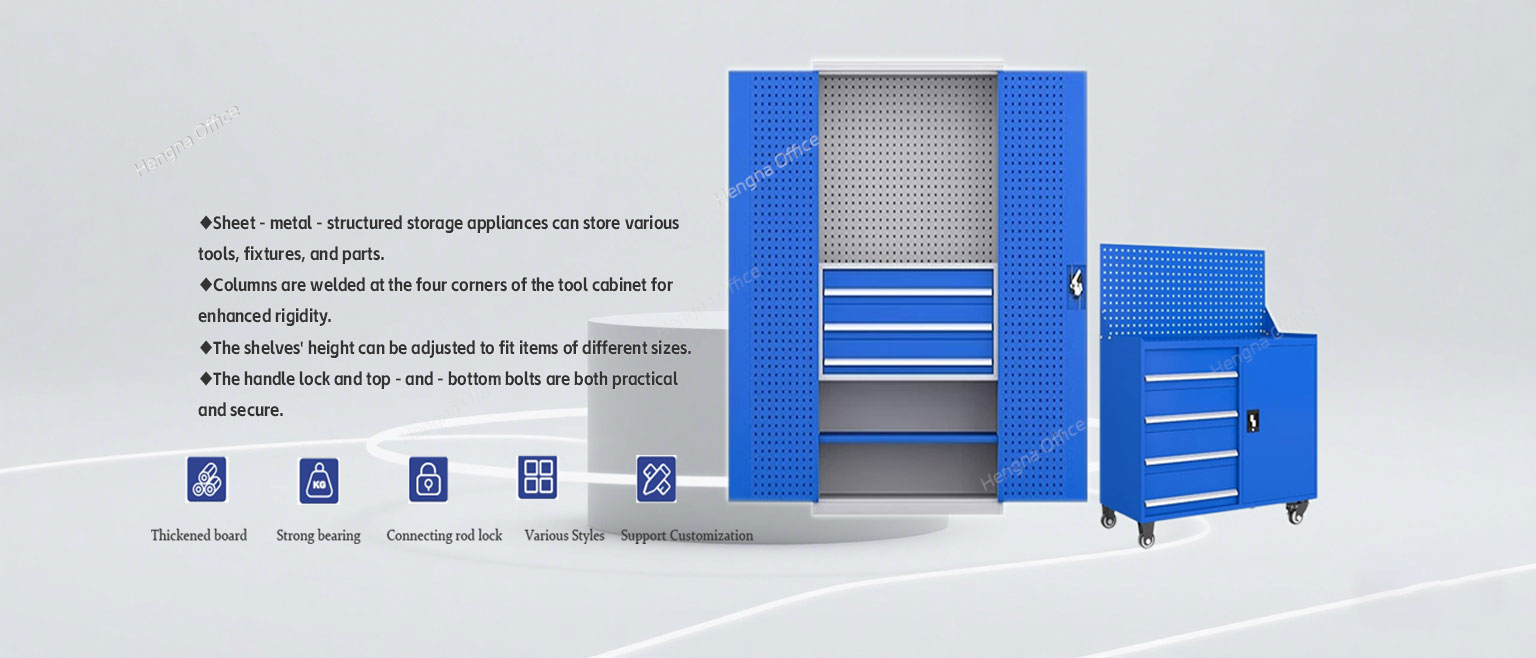
A 1800mm tool cabinet looks great in a catalog photo — clean floor, perfect lighting, drawers staged with new tools. Put it on a real shop floor for six months. Coolant mist settles on the top every shift. A forklift clips the corner while backing out. Someone leans a 40-kilogram gearbox against the door while reaching for a wrench. The catalog photo did not show any of that.
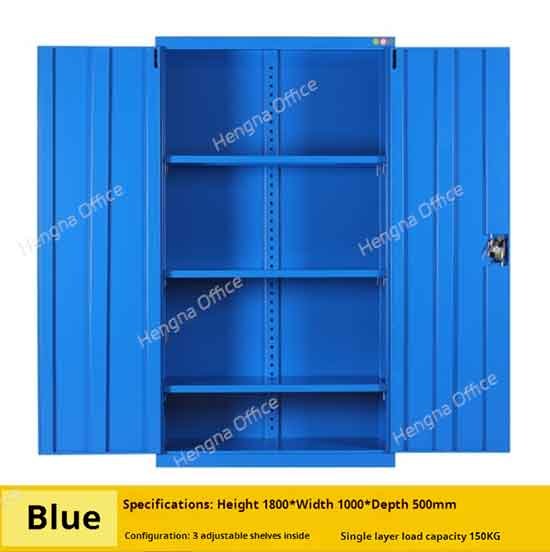
This cabinet is rated for 150 kilograms per shelf, built from cold-rolled steel, finished with powder coating at 60 to 80 microns. Here is what those numbers actually mean after the crate gets opened and the cabinet goes to work.
1800 by 1000 by 500mm — Why These Dimensions
These are not random numbers. 1800mm is the maximum height an average person can comfortably reach without a step stool. 1000mm fits through a 36-inch door frame. 500mm deep lets you reach items at the back without leaning into the cabinet. Triple adjustable shelves on a 25mm pitch allow reconfiguration when your tool inventory changes — and it always changes. A shop that starts with hand tools adds power tools and machine tooling within a year. Fixed shelves force you to work around them. Adjustable ones work around you.
150 kg Per Shelf — What That Actually Means
150 kilograms is roughly three full 5-gallon buckets of hardware or a bench vise plus its mounting plate. More than most shops will put on a single shelf — which is exactly the point. A shelf rated for 50 kilograms fails at 55. One rated for 150 does not even notice 55. You are paying for the safety margin. The frame underneath is rectangular steel tube with welded joints — not folded sheet metal bolted at corners. Welds stay square under load indefinitely. Bolts loosen from vibration of nearby stamping presses and CNC spindles. If your shop has any vibration source within fifteen meters, welded construction is not a preference. It is structural necessity.
Powder Coating That Survives a Real Shop Floor
Coating thickness is the most important number nobody asks about. 60 to 80 microns passes a 500-hour salt spray test. 30 to 40 microns looks identical out of the crate. Eighteen months on a real floor — cutting fluid mist mildly acidic, weld spatter leaving burn marks, oil seeping into scratches — the thin coating has rust pinholes at every edge. The rust spreads under the surface before any blister appears. By then the steel is already pitted. Ask the supplier directly: what is the powder coat thickness in microns? No number, no order.
Double Doors and 3-Point Locking
Two 500mm doors fold flat against the cabinet sides. A single 1000mm door swings into a 1200mm aisle and blocks forklift traffic. The 3-point locking rod engages the frame at top, middle, and bottom simultaneously, distributing force evenly so the door does not twist when loaded unevenly. A single cam lock lets the unsecured side flex open enough for a pry bar. In a shop where the cabinet holds ten thousand dollars of precision tooling, 3-point locking is the baseline, not a luxury.
Where It Works and Where It Is Overkill
Built for heavy fab shops, machine shops with coolant mist, maintenance bays with daily tool turnover, production lines where tools go from clean to greasy in one shift. Overkill for clean electronics assembly, weekend home garages, or office supply closets. Do not pay for 150 kilograms per shelf if your heaviest item is a stapler. One warning the spec sheet will not give you: heavy items always go on the bottom shelf. A cabinet with three 150-kilogram shelves sounds like it holds 450 kilograms total. It can — but only with weight at the bottom. Load the top shelf with 100 kilos, the center of gravity climbs past the midpoint, and physics does not care what the spec sheet says.

Installation — What the Manual Does Not Mention
The cabinet ships on a pallet, wrapped in moisture-proof film with corner protectors. Remove the wrapping but keep the corner protectors on until the cabinet is in position — doorways and tight turns are where corners get dinged. Position the cabinet on level ground. An unlevel cabinet twists the frame over time, and a twisted frame causes doors to misalign and locks to bind. Use the adjustable leveling feet — four turns each, a two-minute job that adds years to the cabinet’s structural life. If the floor is permanently uneven, shim under the feet, not under the cabinet base. Weight distribution in the first week matters more than most shops realize. Load the bottom shelf with the heaviest items first, fill upward. A cabinet loaded top-heavy will be slightly less stable every time someone opens both doors — not enough to tip today, but enough to slowly twist the frame over months until the left door does not quite meet the right one in the middle.
After six months on the floor, check the cabinet for level. Floor settling, vibration, and repeated load cycles can shift the cabinet by a millimeter or two — not visible to the eye, but enough that the left door starts rubbing against the frame. A two-minute adjustment with the leveling feet fixes it. Also check the door hinges for any play. A hinge that has loosened by half a millimeter today will be rattling by next quarter. Tighten it now, while the screw hole is still round. These are not maintenance tasks that require a maintenance ticket. They are five-minute checks any operator can do during a coffee break. The difference between a cabinet that looks tired after two years and one that still operates like new after eight is whether anyone bothered to do these checks.
One final note that does not appear on any spec sheet: this cabinet was built in Luoyang, in a factory that has been making steel furniture for nine years. The welders who assemble the frame have been doing this specific job for most of that time. The powder coating line runs the same 180-degree bake cycle every day, checked with a thickness gauge at the start of each shift. These are not marketing claims. They are production floor realities. When you spec a cabinet from a factory where the team knows why 60 microns matters and what happens when you try to get away with 30, what arrives in the crate matches what was on the purchase order. That is the real difference between buying from a manufacturer and buying from a catalog reseller who has never set foot on the factory floor.