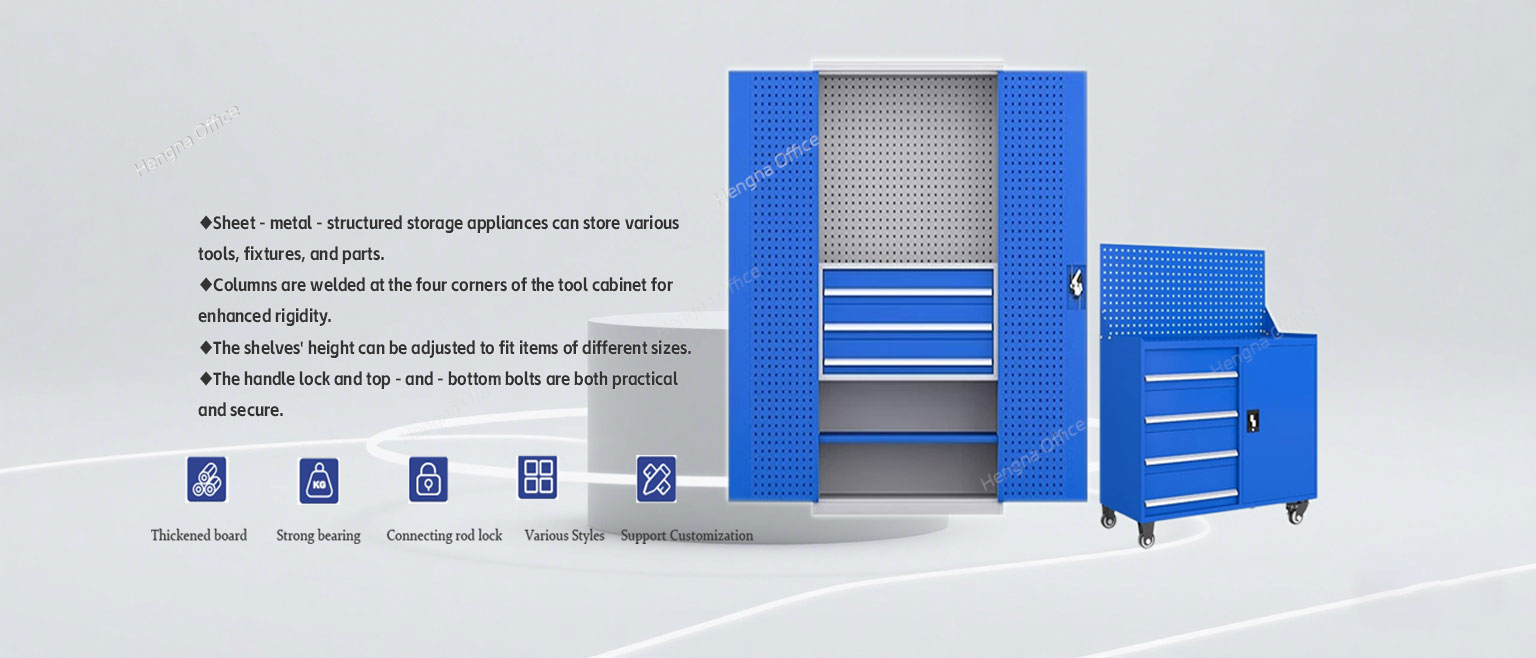
A $300 lockable tool cabinet and a $900 one look nearly identical on a website. Same powder-coated steel. Same heavy-duty label. The difference reveals itself around year three — drawer slides grinding, lock cylinder wobbling, bottom shelf sagging under weight it was never rated to carry. Buying a lockable tool cabinet is not about picking the right color or counting how many drawers it has. It is about four specs that determine whether the cabinet is scrap metal in three years or still holding tools in ten.
1. Steel Gauge — 0.8mm vs 1.2mm Is Four Extra Years
Cold-rolled steel is the baseline for any factory cabinet. It starts as hot-rolled coil, gets pickled in acid to remove mill scale, then run through rollers at room temperature. The cold rolling tightens the grain structure — roughly 20% stiffer than hot-rolled sheet of identical thickness.
Budget cabinets use 0.6 to 0.8mm body panels. They feel solid enough in the showroom empty. Load forty kilograms of tools per shelf, push it against a wall, bump it with a pallet jack once — the frame twists. The door stops closing square. The lock bolt misses the strike plate by a millimeter. Factory-grade cabinets start at 1.0mm body panels and 1.2mm for doors and drawer fronts. The extra steel costs the manufacturer about twelve to fifteen dollars per cabinet — but buys four additional years before the frame racks. Push the door panel with your thumb. If it flexes, walk away.
2. Drawer Slides — The Spec That Fails First
Cheap cabinets use friction slides — two pieces of steel rubbing on each other. They slide smoothly when the drawer is empty. Load fifteen kilograms of sockets into one and the slide grinds. After six months of daily use, a mechanic kicks the drawer shut because pulling the handle takes too much force. That bends the drawer front. That is how the slide fails completely six weeks later.
Ball-bearing slides rated for 45 kilograms per pair is the absolute minimum for a shop cabinet. Drawers holding steel tooling — vises, large wrenches, die sets — need 80 to 100 kilograms per pair. Full-extension slides let you reach the socket at the back without emptying the front half first. A catch at full extension stops the drawer from sliding out when someone pulls too hard in a hurry. The drawer bottom spec matters: a 0.5mm steel bottom with a single spot weld bows under fifteen kilos, jamming the drawer below it. Double-folded edges add 40% more stiffness. A two-dollar manufacturing detail that costs eighty dollars to fix later.
3. The Lock — What It Actually Protects
A lock on a tool cabinet serves two real purposes. One: casual theft deterrence. A 3-point locking rod — engaging the frame at top, middle, and bottom — is the minimum for anything holding valuable tools. A single-point cam lock lets the unsecured side flex open enough for a pry bar. Two: accountability in a shop with three shifts. When torque wrenches go missing and the cabinet was unlocked, nobody on any shift admits to losing them. A locked cabinet means one person — the shift supervisor holding the key — is responsible. That is not a security feature. That is a management feature.
What a lock does not protect against: tools dropped from overstuffed drawers, angle grinder sparks pitting powder coat, carbide tools rattling against each other in bare metal drawers. More tools get destroyed inside cabinets than stolen from them.
4. Powder Coating Thickness — 60 Microns vs 30 Microns
Powder coating is the cabinet’s primary rust protection. Polyester powder gets electrostatically sprayed and baked at 180 to 200 degrees Celsius, fusing into a shell bonded to the steel surface. The number that matters is thickness. 60 to 80 microns passes a 500-hour salt spray test without rust breakthrough. 30 to 40 microns looks identical out of the crate. Eighteen months on a shop floor with humidity swings and coolant mist — the thin coating has rust pinholes at every edge and spot weld. The rust spreads silently under the surface before you see any blister. By then the steel is already compromised.
Ask the supplier: “What is the powder coat thickness in microns?” If they cannot give you a number, find a different supplier. Four specs, four numbers: steel gauge in millimeters, slide rating in kilograms, lock type with rod count, coating thickness in microns. Everything else comes after these four.
What You Should Verify Before Signing Any Order
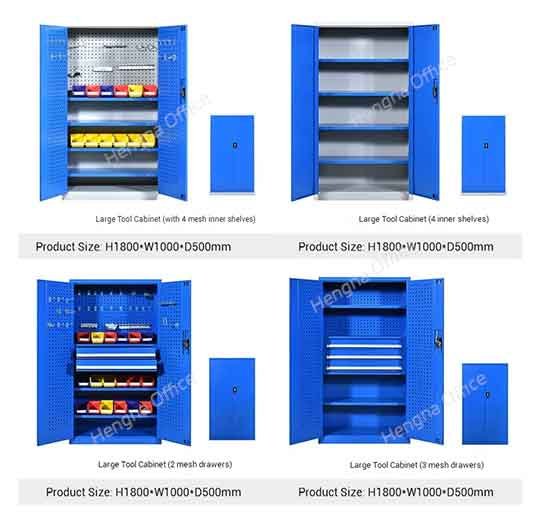
Before you approve a purchase order, get these four numbers in writing from your supplier. Ask for the steel body panel thickness in millimeters — 1.0mm minimum, 1.2mm better. Ask for the drawer slide load rating per pair in kilograms — 45kg is the floor, 80kg if you store steel tooling. Ask whether the locking mechanism is single-point cam or 3-point rod system — single-point is not adequate for a shared shop. Ask for the powder coat thickness in microns — anything under 50 is a red flag. If the supplier hesitates on any of these four, that hesitation is your answer. A supplier who knows their manufacturing process can quote all four numbers from memory. One who cannot is reading them off a spec sheet they did not write, which means the numbers might not match what arrives in the crate. The most expensive cabinet is the one you have to replace in three years because you did not ask these four questions the first time.
One more thing that separates factory-grade cabinets from budget ones: the warranty. A 1-year limited warranty is standard on budget cabinets. A 3-year structural warranty with coverage on drawer slides and locking mechanisms is what you want on a production-floor cabinet. Read the fine print — some warranties cover the steel body but exclude slides, which is like covering the car body but not the transmission. The slides and the lock are the moving parts. They are what fails. Make sure the warranty covers them.