Walk through a machine shop at shift change. Count the tools on benches rather than put away. Count the drawers left unlocked. Count the cabinets with doors hanging crooked because a pallet jack clipped them months ago and maintenance never fixed them.
The conversation about lockable tool cabinets usually starts with theft prevention. It should start with what actually damages tools on a shop floor — and theft is not at the top of that list.
What Actually Destroys Tools in a Shared Shop
Ask any foreman who has been on the floor for five years. A $120 torque wrench gets dropped because an overstuffed drawer let it roll out when someone pulled the handle. A $40 carbide drill chips because it was stored loose alongside steel wrenches, rattling every time the drawer opened. A $200 cordless drill walks away — borrowed for one quick job across the plant and never returned. More tools get destroyed inside cabinets than stolen from them. The cabinet’s job is not just locking things up. It is organizing so tools do not destroy each other.
What a Lock Actually Protects — Three Things
A lock does exactly three things. One: casual theft deterrent. Someone walking past an open bay at night sees a locked door and keeps walking. Two: shift accountability. Day crew cannot blame night crew when the cabinet was locked at handoff. Three: OSHA compliance for restricted-access tools. What a lock does not stop: drawers rated for 45 kilograms failing under 70 kilograms of tooling. Powder coat scratched through by a greasy transmission housing. Carbide tools chipping each other in bare metal drawers.
A $3 Drawer Liner Saves More Than a $50 Lock
Most cabinets ship with 1mm foam mats that tear within six months. A torn liner lets a carbide end mill roll into a carbide drill, chipping both — eighty dollars in tooling destroyed by a two-dollar liner. Replace with 3mm ribbed rubber matting. It grips tools when the drawer moves. It absorbs vibration from the stamping press across the shop. It does not absorb oil like foam does. A $20 roll covers four drawers. Replace liners quarterly. It takes ten minutes and costs less than lunch.
Key Systems — Central vs Keyed-Alike vs Individual
Central locking uses one key through a vertical rod inside the door. Convenient, but a single failure point — if the rod jams from metal dust accumulation, nobody opens anything. Keyed-alike: one key opens every cabinet in a supervisor’s area. Individual drawer locks: most granular, most expensive. Practical compromise: central locking for cabinet doors, keyed-alike across the facility, separate lockable compartment for the truly expensive items.
The Spreadsheet Nobody Shows Procurement
A $250 cabinet that rusts through in three years costs $83 per year. A $600 cabinet lasting ten years costs $60 per year. The math is simple. Less simple: the jammed drawer at 10 AM when a rush job is due. The rusted hinge pin snapping at shift start. If your shop bills $200 per hour and a bad cabinet costs thirty minutes of tool-hunting per week, that is $100 weekly lost productivity. The cheaper cabinet earns back its price difference in two weeks — by being worse. Procurement sees the PO. Maintenance lives with the tax. Both spreadsheets need to be in the same room.

What to Check When the Cabinets Arrive
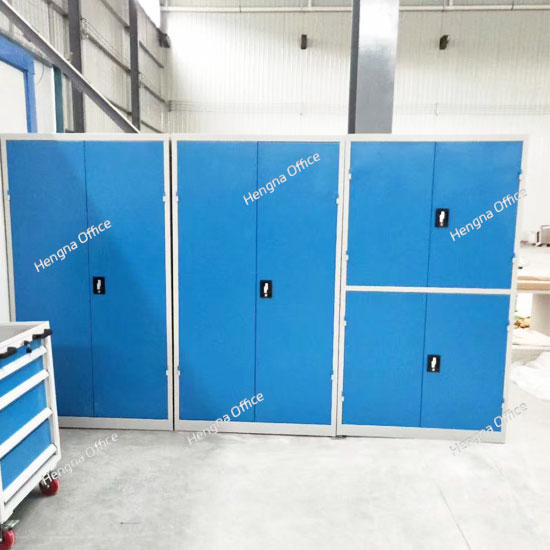
Open the crate and inspect before the delivery driver leaves. Check every door hinge for full range of motion — a stiff hinge today is a broken hinge in six months. Pull every drawer to full extension and listen for grinding — it should be silent. Check the locking rod engagement: lock the door, then push on the unhinged side. If it flexes outward more than two millimeters, the rod is not seating fully. Check the powder coat with a flashlight held at a low angle — any thin spots or orange peel texture will be visible as uneven reflection. Take photos of any issues before the driver departs. Claims for shipping damage are ten times easier with photos taken during receiving. The first ten minutes after delivery are the cheapest insurance you will ever buy against a cabinet that underperforms from day one.
If you are outfitting a shop from scratch, order the cabinets and the drawer liners in the same purchase order. It is a rounding error on the total — less than one percent of the cabinet cost — and it means every drawer is protected from day one. If you are retrofitting existing cabinets, buy a roll of 3mm ribbed rubber matting, pull every drawer, cut the matting to fit, and replace all liners in a single Saturday morning session. Label each drawer with its contents and weight rating while you are in there. The whole shop done in four hours, a hundred dollars in materials, and your tooling is protected for the next two years. That is the kind of maintenance that pays for itself before lunch on Monday.
The best time to invest in lockable cabinets with proper drawer organization is before you have a tool accountability problem. The second best time is the day after your shift supervisor tells you three torque wrenches are missing and nobody on any shift knows where they went. The cost of the cabinets is fixed and known. The cost of missing tools, downtime from disorganization, and the slow erosion of shop discipline is invisible until it is not. By then, you are buying cabinets anyway — just under pressure, in a hurry, and probably paying more. Get ahead of it.
In the end, a lockable tool cabinet is not a purchase. It is a policy. It says: tools go back where they belong, the person with the key is accountable, and the organization system is not optional. A shop that enforces that policy with good equipment runs differently from one that hopes for the best with whatever cabinets happen to be bolted to the wall. The cabinets do not create the culture. But they make it possible. Without them, even the best shop manager cannot enforce tool accountability across three shifts and thirty people. With them, the system enforces itself.